Frictionless and Broke: How One-Click Shopping Is Rewiring the Way Americans Spend
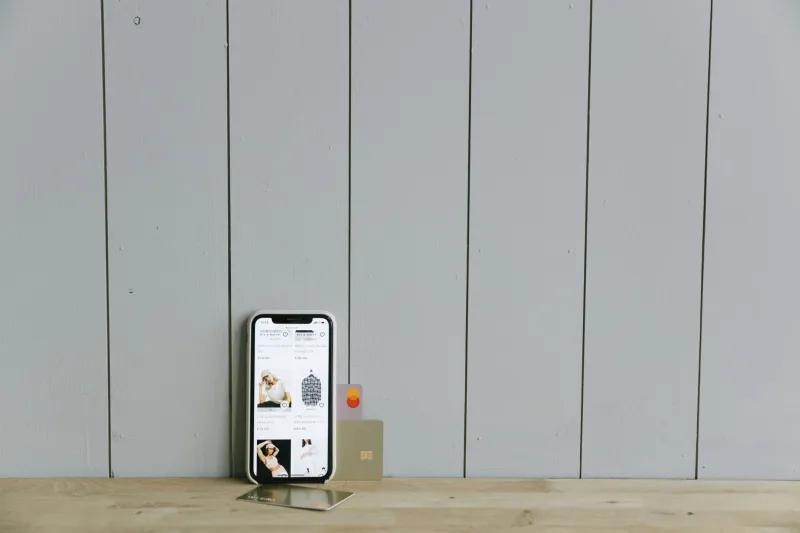
There's a moment most of us know well. You're half-watching TV, phone in hand, and somehow — without really deciding anything — you've ordered a $47 gadget you'd never heard of 90 seconds ago. No checkout form. No digging for your card. Just a tap, a confirmation buzz, and a vague sense that something happened.
That moment isn't an accident. It's the product of years of deliberate design, behavioral research, and platform engineering aimed at one goal: removing every possible pause between wanting something and buying it.
And it's working. Impulse buying in digital spaces has exploded, with some consumer research suggesting that nearly 40% of all online purchases in the US are unplanned. That number has climbed steadily as the biggest all-in-one marketplaces have refined their tools for collapsing the gap between impulse and action.
The Architecture of the Effortless Purchase
When behavioral economists talk about "friction" in purchasing, they mean anything that slows you down — a multi-step checkout, having to re-enter payment info, a confirmation screen that asks "are you sure?" Each of these small interruptions creates a window for second-guessing. And second-guessing, from a marketplace's perspective, is lost revenue.
So platforms systematically eliminate those windows.
Saved payment methods mean you never have to physically handle your credit card. One-click checkout removes the cart-review step entirely. Auto-filled shipping addresses mean you don't even have to think about where the package is going. Every layer of cognitive effort that gets stripped away is another layer of deliberate decision-making that never happens.
"The checkout process used to function almost like a cooling-off period," says one behavioral economist who studies digital consumer behavior. "When you had to type in your card number, there was a natural moment to reconsider. That moment has been almost entirely engineered out of the experience."
Push Notifications: The Tap on the Shoulder You Didn't Ask For
If checkout design is the passive side of impulse engineering, push notifications are the active side. Major shopping platforms have become remarkably sophisticated at timing these nudges.
Think about when you typically get them. Mid-afternoon slump? Post-dinner scroll time? Late at night when your willpower is depleted and your critical thinking is running on fumes? That timing isn't random. Platforms analyze engagement data to identify when individual users are most likely to respond — and most likely to buy without deliberating.
A notification that says "Still thinking about those headphones? They're going fast!" lands very differently at 11 PM than it does at 9 AM. And the platforms know it.
Combine that with urgency cues — "Only 3 left!" or "Deal ends in 2 hours!" — and you've got a system designed to compress your decision timeline to near zero.
The Subscription Layer That Keeps You In the Ecosystem
Impulse buying doesn't happen in a vacuum. It happens inside ecosystems that are specifically designed to keep you present, engaged, and spending. Membership programs — the kind that offer free shipping, exclusive deals, and streaming perks bundled together — serve a psychological function beyond their stated benefits.
Once you're paying a monthly or annual fee, you feel a pull to "use" the platform to justify the cost. That pull keeps you returning. And every return is another opportunity for the algorithm to surface something you didn't know you wanted.
Research on the "sunk cost fallacy" shows that people who've already paid into a membership are significantly more likely to complete purchases they might otherwise abandon. The subscription isn't just a revenue stream — it's a commitment device that makes you a more reliable buyer.
What Your Phone Knows About Your Weak Spots
Here's where it gets genuinely unsettling. The data that major platforms collect isn't just used to recommend products. It's used to build a behavioral profile that identifies your specific purchasing vulnerabilities.
Browse running shoes three times without buying? The platform notes the hesitation and may surface a different price point, a limited-time discount, or a "customers also loved" alternative. Tend to buy home goods on Sunday mornings? Expect more home-goods placements during that window.
This isn't science fiction — it's standard practice across the biggest US marketplaces. The result is a shopping experience that feels personalized in a friendly way but is actually calibrated to your specific psychological patterns in ways you're probably not aware of.
So What Can You Actually Do About It?
The good news is that friction works both ways. Just as platforms use design to remove barriers to buying, you can introduce your own barriers to slow things down. None of this requires heroic willpower — just a few intentional changes to how you engage with shopping apps.
Delete saved payment methods. It sounds extreme, but having to re-enter your card number takes about 60 seconds and creates exactly the kind of pause that lets your prefrontal cortex catch up with your impulse. Many people find that this single change meaningfully reduces unplanned purchases.
Turn off push notifications for shopping apps. You control when you open the app. The app shouldn't control when you think about shopping. Go into your phone settings right now and revoke notification permissions for at least the three shopping apps you use most.
Use a wish list as a waiting room. Instead of buying immediately, add items to a wish list and set a personal rule — 48 hours minimum before purchasing anything that wasn't on your list before you opened the app. You'll be surprised how many things you forget about entirely.
Unlink your accounts from one-click services. One-click checkout is convenient, but convenience has a cost. Opting out of these features forces a small amount of friction back into the process.
Set a monthly "impulse budget." Rather than trying to eliminate unplanned buying entirely (which is both hard and joyless), give yourself a fixed monthly amount for spontaneous purchases. Once it's gone, it's gone. This keeps the fun of discovery without the financial hangover.
The Platform Isn't the Enemy — But Eyes Open Matters
None of this is to say that all-in-one marketplaces are villainous. Convenience is genuinely valuable, and there's nothing wrong with a platform making it easy to buy things you actually need. The issue is when "easy" tips over into "automatic" — when the experience is so frictionless that real decision-making stops happening.
At ShopZilla Hub, we're big believers in shopping smarter rather than shopping harder. That means appreciating the convenience these platforms offer while staying clear-eyed about the mechanics underneath. The best shopping experiences are the ones where you decide — not the algorithm, not the notification, and definitely not a one-click button that bypassed your better judgment at 11:45 on a Tuesday night.
Knowing how the system works is the first step to using it on your own terms.