Convenience Killed the Expert: What We Lose When Everything Comes From One Place

Photo: Gage Skidmore from Surprise, AZ, United States of America, CC BY-SA 2.0, via Wikimedia Commons
There was a time when buying a new guitar meant walking into a music shop and talking to someone who had spent twenty years playing in weekend bands and could tell the difference between a laminate top and solid spruce by the sound. Buying a mattress meant a conversation with a sleep consultant who asked about your posture, your partner's weight, and whether you ran hot at night. Buying a camera meant a guy named Dave who'd been selling Nikons since 1987 pulling out three models and explaining exactly why each one was or wasn't right for you.
Dave's shop closed in 2021.
This isn't a nostalgia piece — or at least, it's trying not to be. It's a genuine question about what American consumers are trading away as one-stop shopping platforms continue their steady march toward total retail dominance.
The Rise of the Everything Store (Again)
All-in-one retail isn't new. Department stores like Sears and Montgomery Ward were doing it over a century ago. But the modern mega-marketplace has scaled the concept to a degree that would have seemed impossible even fifteen years ago. Today, platforms like Amazon, Walmart's e-commerce hub, and emerging competitors offer tens of millions of SKUs spanning electronics, fashion, groceries, furniture, pharmaceuticals, and everything in between.
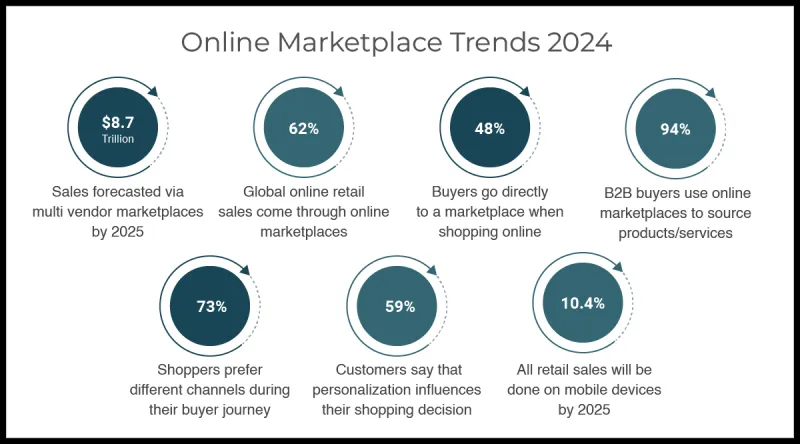
The numbers are staggering. E-commerce now accounts for roughly 22% of all US retail sales, and the share held by large all-in-one platforms is growing faster than the overall market. For millions of American households, one or two platforms handle the overwhelming majority of their shopping.
The convenience argument is airtight. Fewer trips, faster delivery, easy returns, and price comparison at your fingertips. For busy families, that's not a luxury — it's a practical necessity.
But something is getting lost in the transaction.
What Specialized Knowledge Actually Does for You
Marcus Webb ran a specialty outdoor gear store in Asheville, North Carolina for eleven years before closing his doors in 2023. He doesn't blame any single platform, but he's clear-eyed about the dynamic.
"When someone came in asking for a hiking boot, I wasn't just selling them a boot," he says. "I was asking where they were hiking, how far, what terrain, whether they had any ankle issues. I was fitting them. I was making sure they didn't end up with blisters on the Appalachian Trail because they bought the wrong pair online based on star ratings."
That kind of contextual expertise is genuinely hard to replicate algorithmically. Review systems on large platforms are useful but imperfect — they aggregate experience rather than personalizing it. A boot that earns four and a half stars from 12,000 reviewers might still be completely wrong for your specific foot shape, gait, or intended use.
Consumer behavior researcher Dr. Priya Anand, who studies retail decision-making at a Midwestern university, puts it plainly: "We've optimized for transaction speed at the expense of decision quality. Shoppers are completing purchases faster than ever, but satisfaction rates on high-involvement purchases — things like electronics, furniture, and sporting equipment — have actually declined over the same period."
The Quiet Erosion of Product Quality
Here's something that doesn't get talked about enough: when specialty retailers disappear, it doesn't just affect service quality. It affects the products themselves.
Specialty stores were historically the proving grounds for quality goods. A boutique kitchen store that stocked only twenty knife brands had an incentive to curate carefully — every product on the shelf was a reflection of the store's reputation. All-in-one platforms, by contrast, operate on volume and velocity. The incentive structure rewards listings that generate clicks and conversions, not necessarily products that hold up over time.
This creates what some supply chain analysts call the "race to the floor" — manufacturers, knowing that mega-marketplace shoppers are primarily driven by price and star ratings, quietly reduce material quality to hit lower price points and stay competitive in algorithmic rankings. The result is a marketplace flooded with products that look good in photos and read well in bullet points but underperform in real-world use.
Lisa Tran, who owned a specialty home goods boutique in Austin for eight years, saw this firsthand. "I used to carry a ceramic cookware brand that was genuinely excellent. Then it started showing up on the big platforms at a lower price point. I called the rep. Turns out they'd changed the clay composition to cut costs. Same brand, same name, different product. My customers would have never known."
Fashion, Electronics, and the Informed Buyer Problem
The erosion of expertise shows up differently across product categories, but it's consistent.
In fashion, the loss of knowledgeable retail staff has accelerated the rise of fast fashion and overconsumption. Without someone to explain fabric quality, construction, and fit, shoppers rely on photos and price — which systematically rewards the cheapest possible version of any given item.
In consumer electronics, the problem is choice paralysis compounded by misinformation. All-in-one platforms list hundreds of variations of any given product, with spec sheets that are difficult for casual consumers to interpret. Specialty electronics retailers used to bridge that gap with trained staff who could explain what actually mattered for a given use case. That guidance is mostly gone now, replaced by sponsored listings and manufacturer-written descriptions.
In home goods, the consequences can be surprisingly costly. Buying the wrong paint, the wrong grout, or the wrong type of wood finish because no one was there to ask the right questions can turn a weekend project into an expensive redo.
Is There a Middle Ground?
The all-or-nothing framing — either shop exclusively at big platforms or exclusively at local specialists — is a false choice. The reality is that thoughtful consumers can get the best of both worlds with a little intentionality.
For routine, low-stakes purchases — paper goods, basic apparel, commodity household items — all-in-one platforms offer genuine value. The convenience premium is worth paying when the product is simple and the stakes are low.
For higher-involvement purchases — anything where fit, quality, or technical specification matters — it's worth seeking out remaining specialty retailers, manufacturer showrooms, or at minimum, independent review sources that go deeper than star ratings. Websites run by enthusiast communities, independent product testers, and category-specific publications can partially fill the expertise gap.
And when you do find a local specialist who genuinely knows their stuff? Consider what that knowledge is worth. The slightly higher price at an independent bike shop or a specialty kitchen store isn't just paying for a product — it's paying for accountability, expertise, and a shopping experience that actually helps you make a better decision.
The Bigger Picture
The rise of the everything store isn't going to reverse itself. The convenience is too real, the scale too massive, and consumer habits too deeply ingrained. But that doesn't mean we have to be passive about what we're trading away.
At ShopZilla Hub, we think the best version of modern shopping is one where you use every tool available — including the big platforms — without losing sight of what good buying actually looks like. Sometimes that means slowing down. Sometimes it means paying a little more. And sometimes it means finding the modern equivalent of Dave, wherever he ended up after the camera shop closed.
Because at the end of the day, a great purchase isn't just about price or speed. It's about getting the right thing.