The Mall Didn't Die — It Moved Into Your Phone

Photo: Australian National Maritime Museum on The Commons, No restrictions, via Wikimedia Commons
My mother spent Saturday afternoons at the King of Prussia Mall. Not shopping, exactly. Wandering. Trying samples, watching people, killing time in a building whose entire business model was making her feel comfortable enough to eventually buy something.
I do the same thing now, except my mall fits in my pocket and never closes.
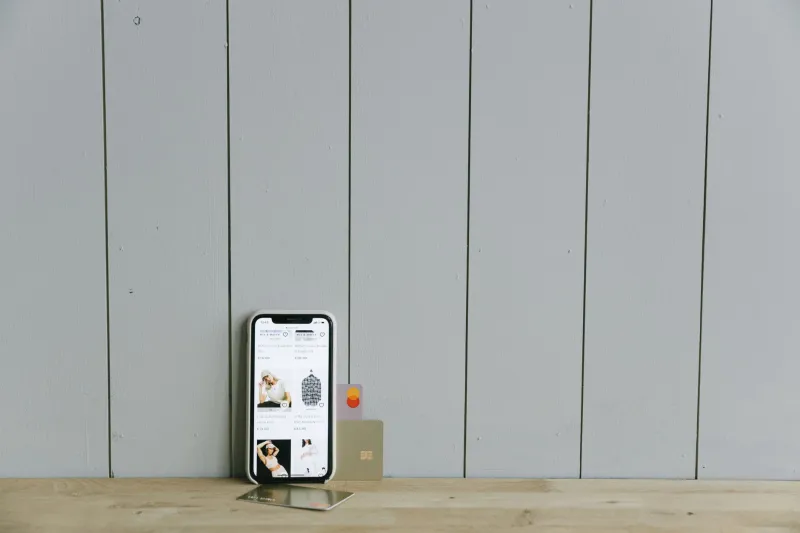
I know this because I recently checked my screen time report and discovered that shopping apps accounted for more of my week than news, podcasts, and messaging combined. I wasn't buying most of that time. I was browsing. Watching livestream sellers demo kitchen gadgets. Scrolling deals I had no intention of claiming.
And by every indication, I'm not alone. I'm the new normal.
Browsing as a Pastime, Not a Task
For most of e-commerce history, shopping online was errand-shaped. You needed a thing, you searched for the thing, you bought the thing, you left.
That model has been steadily inverted. Shoppable livestreams — a format imported from China, where it's a hundreds-of-billions-dollar industry — have made watching people sell things a form of entertainment in its own right. Marketplace apps have added feeds, follow buttons, comment sections, and gamified drop events. The shopping app of 2025 doesn't want your transaction. It wants your Tuesday evening.
Sociologists have a term for the spaces that aren't home and aren't work: the "third place." Cafés, barbershops, bowling leagues, malls. These are the venues where Americans used to spend unstructured leisure time.
There's a strong argument that the shopping app is now the default third place for a large chunk of the country — always open, free to enter, and endlessly responsive to your attention.
The Convenience Is the Trap
Here's what makes this shift different from the mall era, and I say this as someone nostalgic for the food court.
The mall had friction. You had to get there. You had to find parking. Your purchases had to fit in your arms. Those frictions were annoying, but they were also circuit breakers. They gave your brain time between impulse and acquisition.
The shopping app has none. The distance between "huh, interesting" and "purchased, arriving Thursday" is about two taps. A leisure activity and a spending activity have been fused into a single continuous gesture, and no generation of consumers has ever had that combination before.
The mall wanted your Saturday. The app wants your Saturday and your wallet, seamlessly, without ever asking you to stand up.
So Which Do We Worry About: The Hours or the Money?
I've gone back and forth on this, and I've landed somewhere uncomfortable: the screen time itself bothers me less than what it does to my judgment.
An hour spent watching a livestream is recoverable. But an hour spent in a shopping environment — even without buying — recalibrates your sense of what's normal to own. Every scroll is a catalog, and catalogs have a cumulative effect. Things you'd never have thought to want become things you feel mildly deprived of not having.
The receipts are downstream of the exposure. Which means the screen time and the spending aren't two separate problems. They're one problem with a delay built in.
What I'm Actually Doing About It
I don't think the answer is to quit these apps. They're genuinely useful, the prices are often real, and a well-run livestream seller is more transparent than half the big-box stores I've shopped. Purism is a luxury position.
But I've started treating shopping apps like I treat a casino floor: a fine place to visit with a plan, a dangerous place to visit out of boredom. Concretely, that means three rules:
- Enter with an errand. If I open the app without knowing what I'm there for, I've just told the algorithm it can drive.
- Keep browsing and buying in different sessions. If something catches my eye while I'm scrolling for fun, it waits until tomorrow. Most things don't survive the wait, which tells me they were never wants — just mentions.
- Watch the weekly hours, not just the monthly spend. The hours are the leading indicator. The receipts follow.
The mall didn't die. It just found a way to follow us home, stay open all night, and remember exactly what we lingered over. Enjoying it isn't a character flaw — my mother enjoyed the mall too. But the mall never knew which window displays stopped us, and ours does. That difference deserves a little of our attention. Maybe not all of it. But some.