Spending More to Save More: The Sneaky Math Behind Free Shipping Minimums

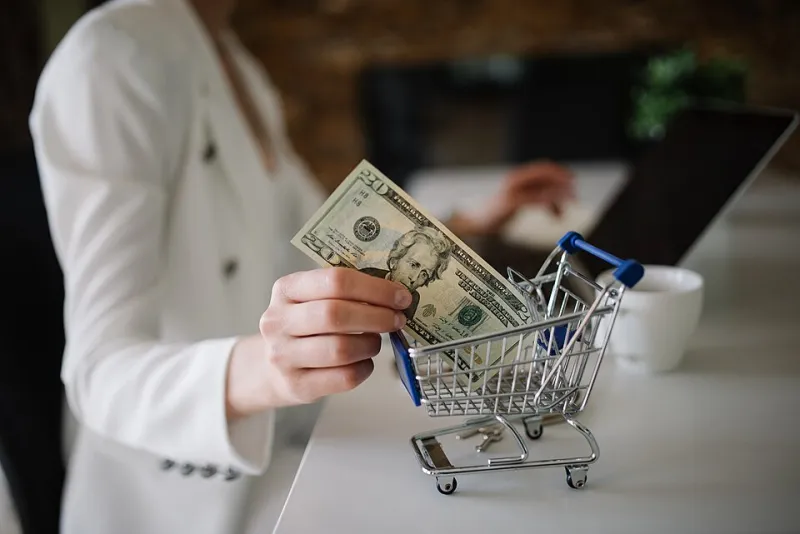
Photo: بندر المسند, CC BY-SA 4.0, via Wikimedia Commons
Let's be honest: the moment you see "Free shipping on orders over $35," something shifts in your brain. Suddenly that $27 cart feels incomplete. You start scrolling for something — anything — to close the gap. A pack of batteries. A candle. Maybe a kitchen gadget you've been vaguely curious about. Before you know it, you've spent $52 to avoid a $5.99 shipping fee.
Congratulations. You just paid $46 more than you intended to save six bucks.
This isn't an accident. Free shipping thresholds are one of the most carefully engineered pricing strategies in modern e-commerce, and they work on almost everyone — even people who know exactly what's happening.
What's Actually Going On With That Threshold
When a marketplace sets a free shipping minimum, it's not doing you a favor. It's setting an anchor point designed to lift what retailers call "average order value," or AOV. Studies from the e-commerce industry consistently show that free shipping thresholds inflate average transaction sizes by 30% or more. Some retailers report even higher lifts depending on the product category.
The psychology behind it is surprisingly simple. Once you've mentally committed to getting free shipping, you've already agreed to spend at least $35 (or $25, or $50 — the number varies by platform). From there, adding a few extra dollars feels trivial compared to the perceived savings. Economists call this "loss aversion" — the idea that avoiding a loss (the shipping fee) feels more urgent than gaining an equivalent amount of money.
In other words, you'll spend $15 to avoid a $6 charge without blinking.
The Items You Didn't Know You Needed
Here's where it gets interesting. Platforms don't just set these thresholds and hope for the best. They actively surface "filler" products at exactly the right moment — low-cost, impulse-friendly items that appear in carousels labeled "Frequently Bought Together" or "You Might Also Like" when your cart is hovering just below the free shipping cutoff.
These aren't random suggestions. They're algorithmically selected to match your gap-to-threshold almost precisely. If you need $8 more for free shipping, don't be surprised when a $7.99 item magically appears at the top of your recommendations. The platforms have gotten very, very good at this.
Small household goods, snack-sized beauty products, and novelty accessories dominate these suggestion zones because they're low-commitment purchases that feel easy to justify. They're also often high-margin items for the seller.
Doing the Actual Math
Before you toss something extra in your cart, try running a quick calculation. It takes about 30 seconds and can save you real money.
Step 1: Find out what the shipping fee actually is if you don't hit the threshold. Many platforms show this clearly at checkout — it's usually somewhere between $4.99 and $9.99.
Step 2: Calculate how much you'd need to spend to reach the free shipping minimum.
Step 3: Ask yourself: is the cost of that extra item less than the shipping fee? If you need to spend $12 more to avoid a $5.99 fee, you're already in the red.
More often than not, just paying the shipping fee and buying only what you came for is the cheaper option. It feels counterintuitive, but the numbers don't lie.
When Free Shipping Actually IS Worth It
To be fair, free shipping thresholds aren't always a trap. There are a few scenarios where meeting the minimum genuinely makes sense:
-
You have a running shopping list. If you regularly buy household staples — paper towels, laundry detergent, pet food — bundling a few of those into one order to hit the threshold is smart, not impulsive. You were going to buy those things anyway.
-
You're shopping for gifts or seasonal items. If the holidays are coming up or you're stocking up for a specific occasion, it can make sense to hit a threshold by grabbing something you'd planned to purchase eventually.
-
The "filler" item is genuinely useful. Sometimes the suggested product actually fills a real need. The problem isn't adding items — it's adding items you don't need just to unlock a perk.
The key difference is intentionality. If you're adding items because you actually want them, great. If you're adding them purely to hit a number, that's the platform winning, not you.
Practical Ways to Push Back
You don't have to swear off free shipping entirely to beat this system. A few habits can make a big difference:
Use a wishlist strategically. Instead of impulse-adding filler items, save things to a wishlist and revisit them a week later. If you still want them, great. If not, you've saved yourself some money.
Shop with a list, not a mood. Browsing without a specific goal is exactly when free shipping thresholds do the most damage. Going in with a clear list of what you need makes it much easier to stop when you've got everything.
Compare the total cost across platforms. Sometimes a competitor charges $3 more per item but offers free shipping with no minimum. The "more expensive" option might actually be cheaper when you factor in what you'd have to add to your cart elsewhere.
Consider a membership program — but do the math first. Many platforms offer subscription-based free shipping (no minimums) for an annual fee. If you shop frequently enough, this can absolutely pay off. But run the numbers: if you'd spend $99 a year on a membership and only save $30 in shipping fees, you're still in the hole.
The Bottom Line
Free shipping is a marketing tool, not a gift. The platforms offering it have done extensive research to figure out exactly how much extra spending they can extract from you in exchange for waiving a delivery fee — and they're very good at it.
That doesn't mean you should avoid online shopping or even avoid chasing free shipping thresholds. It just means going in with your eyes open. The best shoppers at any marketplace — including here at ShopZilla Hub — are the ones who know the game well enough to play it on their own terms.
So next time that little progress bar inches toward the free shipping cutoff, take a breath. Do the math. Then decide whether you're spending smarter — or just spending more.